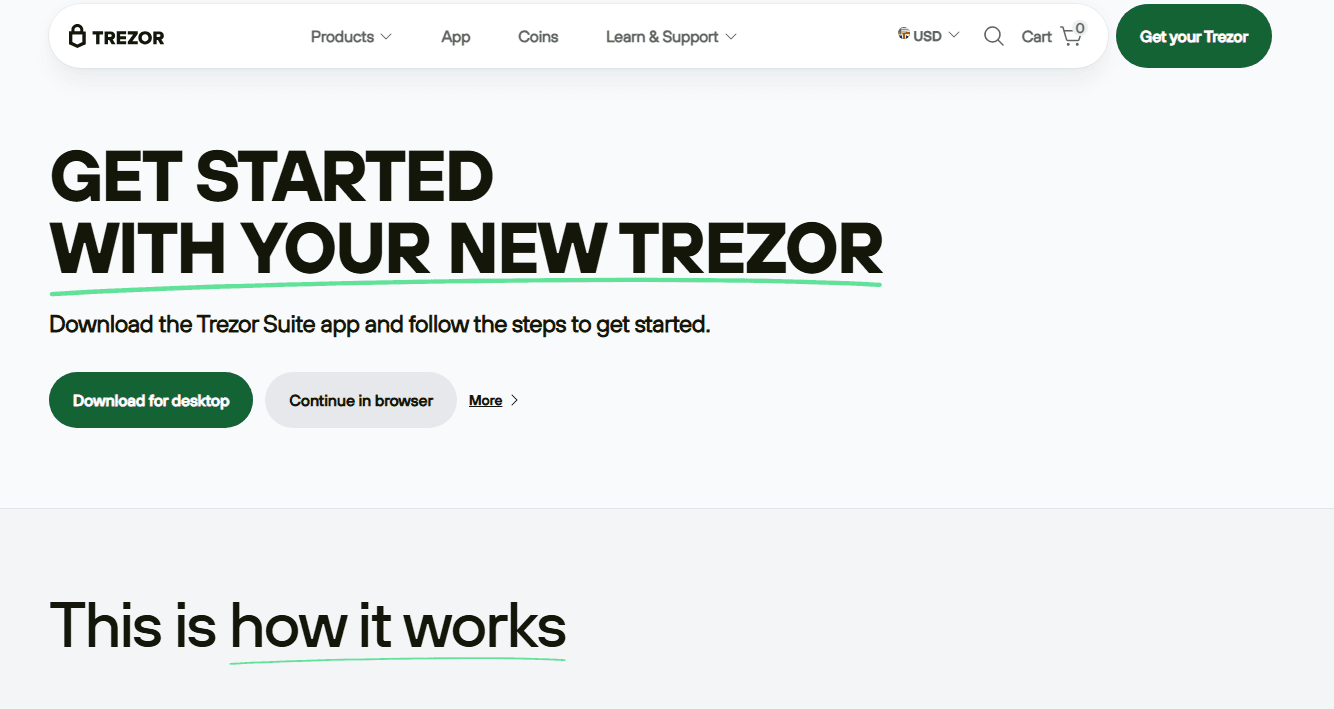
Trezor.io/start: Your Complete Guide to Starting with Trezor Wallets
Managing cryptocurrencies securely is one of the most important aspects of digital asset ownership. Trezor, a leading hardware wallet provider, offers an excellent solution for safeguarding crypto holdings. Their official onboarding portal, Trezor.io/start, provides users with everything they need to safely set up, manage, and secure their wallets.
This guide explores Trezor.io/start in detail, including device setup, Trezor Suite installation, transaction management, security protocols, troubleshooting, and tips for both beginners and advanced users.
1. What Is Trezor.io/start?
Trezor.io/start is the official entry point for all new and existing Trezor users. Its main purpose is to provide a clear, step-by-step onboarding experience. Through the portal, users can:
Set up their Trezor hardware wallets correctly.
Download and install Trezor Suite, the software for managing crypto assets.
Understand security features, including PIN codes and recovery phrases.
Access guides, tutorials, and troubleshooting resources.
The portal ensures that users begin their Trezor experience securely, minimizing the risk of errors or security breaches.
2. Why Trezor.io/start Matters
Cryptocurrency management can be intimidating for beginners, and even experienced users must stay vigilant about security. Trezor.io/start is essential because it:
Provides clear instructions for safe wallet setup.
Teaches security best practices for PINs, recovery phrases, and device handling.
Ensures users download official software, preventing phishing attacks.
Supports multiple platforms, including desktop and mobile devices.
Starting here helps users confidently set up and manage their crypto without compromising security.
3. Choosing the Right Trezor Device
Trezor offers two main hardware wallets:
Trezor Model One: Affordable, beginner-friendly, supports multiple cryptocurrencies.
Trezor Model T: Advanced model with a color touchscreen, wider coin support, and improved usability.
Trezor.io/start provides detailed comparisons so users can select the device that best fits their needs, whether for basic storage or active portfolio management.
4. Unboxing and Initial Setup
After selecting a device, Trezor.io/start guides users through initialization:
Step 1: Connect the Device
Use the USB cable to connect your Trezor wallet to a computer or mobile device.
Step 2: Visit Trezor.io/start
Download the official Trezor Suite software from the portal.
Step 3: Set a PIN
Choose a strong PIN, which is required whenever the wallet is connected.
The PIN protects the wallet from unauthorized access if the device is lost or stolen.
Step 4: Backup with Recovery Seed
Trezor generates a 12, 18, or 24-word recovery phrase.
Write the words down on the supplied card and store them offline in a secure location.
This recovery seed is the only way to restore your wallet if the device is lost or damaged.
5. Installing Trezor Suite
Trezor Suite is the software that allows users to interact with their wallets. Trezor.io/start explains:
Download Trezor Suite for your operating system.
Install the software and launch it.
Connect your Trezor device and unlock it with your PIN.
Add accounts for each cryptocurrency you want to manage.
Trezor Suite provides an intuitive interface to send, receive, swap, and stake cryptocurrencies, all while keeping private keys offline.
6. Security Best Practices
Trezor.io/start emphasizes security:
Never share your recovery phrase or PIN. Trezor staff will never request these.
Verify transaction details on the device to avoid malware manipulation.
Keep your firmware updated to ensure protection against vulnerabilities.
Download software only from official sources to avoid phishing.
Avoid public computers when accessing your wallet.
Following these practices is critical to protecting your digital assets.
7. Adding and Managing Cryptocurrencies
Trezor supports hundreds of coins. Trezor.io/start explains:
Installing apps for supported cryptocurrencies in Trezor Suite.
Creating individual accounts for each asset.
Viewing balances, transaction histories, and portfolio summaries in one place.
This enables efficient multi-asset management while keeping funds secure.
8. Sending and Receiving Funds
Transactions are simple and secure:
Receiving crypto: Generate a receiving address in Trezor Suite and confirm it on the hardware device before sharing.
Sending crypto: Enter the recipient’s address and amount in the app, then approve the transaction on the device.
Confirmation on the device ensures transactions cannot be altered by malware or external interference.
9. Staking and Rewards
Trezor Suite allows users to stake supported cryptocurrencies:
Stake coins like Tezos, Algorand, or other supported assets directly from the software.
Track rewards and staking schedules securely.
Trezor.io/start provides guidance on staking procedures and recommended practices.
This allows users to earn passive income while maintaining full control over their funds.
10. Troubleshooting Common Problems
Trezor.io/start offers solutions for typical issues:
Device not detected: Check cables, restart Trezor Suite, or update firmware.
PIN errors: Reset using the recovery seed if multiple attempts fail.
Software crashes: Restart or reinstall Trezor Suite.
Mobile connection issues: Verify compatibility and USB/Bluetooth setup.
Comprehensive support resources ensure that users can quickly resolve most problems.
11. Beginner-Friendly Features
Trezor.io/start is designed with newcomers in mind:
Step-by-step instructions reduce setup errors.
Visual guides and tutorial videos simplify complex steps.
Security tips reinforce safe management of crypto assets.
Official download links guarantee authentic software.
These features help beginners gain confidence while securing their digital assets.
12. Advanced Features for Experienced Users
Even experienced users benefit:
Multi-asset management through Trezor Suite.
Integration with DeFi and Web3 apps.
Real-time firmware and security notifications.
Cross-platform access for desktop and mobile convenience.
These features enable efficient portfolio management without sacrificing security.
13. Privacy Considerations
Trezor ensures privacy:
No personal information is needed to set up a wallet.
Transactions are verified directly on the blockchain.
Private keys never leave the hardware device.
Trezor.io/start reinforces these practices to maintain user control and anonymity.
14. Summary of Benefits
Using Trezor.io/start provides:
Structured onboarding for beginners and returning users.
Secure setup and management of hardware wallets and Trezor Suite.
Guidance for sending, receiving, staking, and portfolio tracking.
Best practices for security and recovery procedures.
Support and resources for troubleshooting and advanced usage.
This ensures users can manage cryptocurrencies safely and efficiently.
15. Conclusion
Trezor.io/start is the definitive starting point for all Trezor users. It provides a structured, secure roadmap from unboxing your device to managing crypto assets. By following the portal’s instructions, users can:
Initialize and secure their Trezor wallet safely.
Set up and use Trezor Suite effectively.
Send, receive, and stake cryptocurrencies securely.
Troubleshoot common issues and stay updated with firmware.
Trezor.io/start guarantees a safe, informed, and organized cryptocurrency experience, allowing users to maintain full control over their digital assets with confidence.